Introduction
A successful fishing trip involves considerably more than a rod, reel, and tackle. Once a fish is hooked and landed, anglers may need to remove hooks, cut line, handle the catch, measure fish, and prepare the fish for transport or cooking. Having the appropriate tools available can make those tasks more organized and easier to manage.
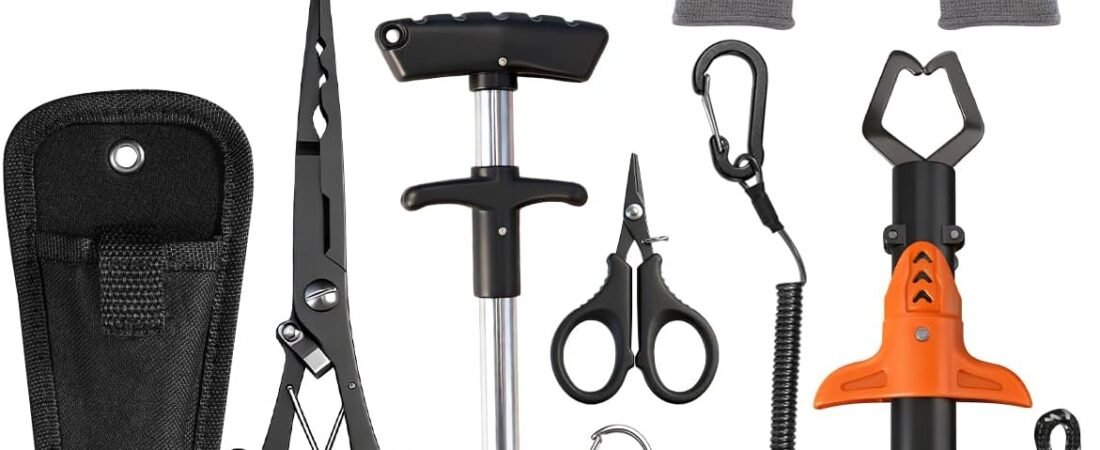
The RALERA Fillet Knife Set for Beginner is presented as a multi-piece fishing tool kit intended to bring several common angling accessories together in one portable setup. The Amazon listing identifies the model as RLR-0001 and describes it as a seven-piece fishing tool kit made primarily from stainless steel. The listed components include fishing pliers, a fish gripper, a hook remover, a fishing line cutter, a retractable lanyard, anti-slip fishing gloves, and a storage bag.
The product title also references a fillet knife, fish measuring equipment, a non-slip grip, and saltwater fishing applications. Because Amazon listings can contain multiple descriptions or updated information, anglers should check the current product page for the exact contents of the package they are considering. The technical details currently identify the style as a seven-piece fishing tool kit, with stainless steel listed as the material.
A fishing tool kit like this is best understood as a collection of complementary tools rather than a replacement for an entire tackle system. It is designed around tasks that happen before, during, and after landing a fish.
For beginners, having several basic tools together can also provide an opportunity to learn what each accessory does and when it is appropriate to use it. More experienced anglers may appreciate the convenience of keeping frequently used tools organized in a dedicated bag rather than searching through a larger tackle box.
This guide explains the main functions associated with the RALERA kit, practical ways to use the different tools, considerations for freshwater and saltwater environments, safety and maintenance practices, and how a multi-tool fishing kit compares with individual fishing accessories.
Key Features
Multi-piece fishing tool configuration
The central concept behind the RALERA kit is consolidation.
Instead of purchasing a pair of fishing pliers, hook-removal tool, fish gripper, line cutter, gloves, and storage solution separately, the kit combines several of these items into one package.
Amazon currently lists the product as a seven-piece fishing tool kit. The listed components include fishing pliers, fish gripper, hook remover, fishing line cutter, retractable lanyard, anti-slip fishing gloves, and a storage bag.
This arrangement can be useful for anglers who are building their first collection of fishing tools. It also gives users a straightforward way to keep accessories together between fishing trips.
A multi-piece kit does not necessarily mean every tool will be needed on every trip. Instead, the value of a kit comes from having different functions available when circumstances change.
Stainless steel construction
The current Amazon technical details identify stainless steel as the listed material.
Stainless steel is widely used in fishing tools because fishing environments can expose equipment to water, moisture, fish residue, and, in saltwater settings, salt that can accelerate corrosion.
The product listing also describes the tools as using corrosion-resistant, titanium-plated stainless steel.
It is important to distinguish corrosion resistance from complete corrosion prevention. Stainless steel can resist corrosion better than many untreated metals, but repeated exposure to saltwater without proper rinsing and drying can still lead to deterioration.
Regular maintenance therefore remains important regardless of the material.
Fishing pliers
Fishing pliers are one of the most versatile accessories in a fishing kit.
They can be used for tasks such as handling hooks, cutting certain fishing lines, manipulating small terminal tackle components, and making adjustments during a fishing session.
The RALERA listing describes its fishing pliers as multifunctional tools intended for hook removal, line cutting, and crimping.
The exact capability depends on the construction of the jaws and cutting surfaces. Anglers should always match the tool to the line, hook, wire, or terminal tackle being handled rather than assuming that every plier can cut every type of material.
Fish gripper
A fish gripper provides another method of handling a landed fish.
Instead of holding a fish directly with wet hands, an appropriate gripper can provide a more controlled point of contact. This can be useful when a fish has sharp fins, teeth, spines, or a slippery body.
Handling technique still matters. A gripper should be used according to its intended design, and anglers should consider the condition and species of the fish before lifting or moving it.
For catch-and-release fishing, minimizing unnecessary handling and following species-specific handling recommendations remain important.
Hook remover
Removing a hook can be one of the more delicate tasks after landing a fish.
A hook remover can provide additional reach between the angler’s hand and the hook. This can be particularly useful when a fish has swallowed a hook or when the hook is positioned in a difficult-to-reach area.
The correct technique depends on the hook location, fish species, hook design, and whether the fish is being kept or released.
A tool can improve control, but it does not eliminate the need for caution.
Fishing line cutter
A dedicated line cutter is useful for cutting fishing line during rig changes, knot preparation, or removal of damaged sections.
Line materials differ significantly. Monofilament, fluorocarbon, braided line, and specialty fishing lines can behave differently when cut.
Using a cutter designed for fishing applications can make routine line work more convenient. However, anglers should avoid forcing a cutting tool beyond its intended capacity.
Non-slip handling
The Amazon listing emphasizes textured, non-slip grips on several of the included tools and also lists anti-slip fishing gloves among the kit components.
Grip becomes particularly important around water because wet hands and wet equipment can be harder to control.
A textured handle can provide additional friction, while gloves can add another layer between the hand and the fish or tool.
However, no grip system makes a tool impossible to drop. Users should still maintain a secure grip and avoid using tools in ways that exceed their intended function.
Retractable lanyard
The inclusion of a retractable lanyard addresses a common problem in fishing: small tools can easily be dropped overboard, left on a dock, or misplaced on shore.
A tether can help keep an accessory connected to the angler or fishing setup.
The lanyard should be used according to its intended attachment method. It should also be inspected periodically for wear, especially if it is exposed to water, sunlight, sand, or repeated pulling.
Storage bag
A dedicated storage bag provides a place to keep the kit together between trips.
This can be especially useful for beginners who are still developing their fishing organization system.
Instead of having several loose tools scattered between tackle compartments, a dedicated kit can create a simple routine: clean the tools after fishing, allow them to dry, and return them to the bag.
The Amazon listing identifies the storage bag as one of the seven listed components.
How It Can Be Used
Preparing for a fishing trip
The first useful application of a fishing tool kit happens before reaching the water.
An angler can inspect the pliers, cutter, hook remover, gripper, gloves, and other components to make sure everything is present and functioning properly.
For a beginner, this creates an opportunity to learn what each tool is designed to do.
It is also a good time to check that cutting surfaces are clean, handles move properly, and there is no visible corrosion or damage.
Preparing the equipment before leaving home is generally easier than discovering that an important tool is missing after a fish has already been landed.
Removing hooks
Hook removal is one of the most common reasons anglers carry fishing pliers and hook-removal tools.
Once a fish is safely secured, the angler can select the tool appropriate for the hook position. Pliers can provide additional control when manipulating the hook, while a dedicated remover may offer better reach for certain situations.
A useful general principle is to avoid rushing.
Fish can move suddenly, and hooks are sharp. Keeping hands away from the hook point whenever practical can reduce unnecessary exposure to injury.
If a hook is deeply embedded in a fish or a person, forcing it out with ordinary fishing tools may not be appropriate. In situations involving significant injury, professional medical assistance may be necessary.
Cutting fishing line
Line cutters can be useful throughout a fishing session.
An angler may need to remove damaged line, cut a tag end after tying a knot, change a leader, or dismantle a rig.
Keeping a dedicated cutter accessible means there is less need to search through a tackle box for a suitable cutting tool.
For braided line in particular, the cutter should be appropriate for the material. Trying to cut unsuitable materials can damage the cutting surface or produce an uneven cut.
Handling landed fish
A fish gripper can provide another method for handling a catch.
This can be particularly useful when the fish is slippery or has features that make direct hand handling less comfortable.
However, fish handling should always account for the species and intended outcome.
If a fish is being released, minimizing handling time and avoiding unnecessary contact with sensitive areas is generally preferable. Some species require particularly careful support and handling.
A tool kit can help with handling, but responsible fishing practices remain more important than any individual accessory.
Measuring fish
The product title references a fish measuring tape, although the current technical details identify the package as a seven-piece tool kit and list the included components differently.
This is an important distinction for anyone purchasing specifically for measurement.
Fish measurement can be necessary when anglers are following minimum-size, maximum-size, slot-limit, or other local fishing regulations. Measurement practices can vary by species and jurisdiction.
Before relying on any included measuring accessory for regulatory compliance, anglers should verify the current package contents and make sure the measurement method matches the rules applicable to the water being fished.
A measuring tool can also be useful simply for recording catches for personal fishing logs.
Using the tools in saltwater
Saltwater environments are harder on fishing equipment than many freshwater environments.
Salt residue can remain on metal surfaces and contribute to corrosion over time. This is why rinsing fishing tools with fresh water after saltwater use is an important maintenance step.
A simple routine can include:
- Remove visible fish residue.
- Rinse appropriate tools with clean fresh water.
- Allow them to dry thoroughly.
- Inspect joints, cutting surfaces, and metal components.
- Store them in a dry location.
Even corrosion-resistant stainless steel should not be treated as maintenance-free.
Organizing the tools in a tackle bag
The storage bag can serve as a dedicated tool module within a larger tackle system.
Instead of mixing pliers, line cutters, and hook removers with lures and terminal tackle, an angler can keep the tool kit together.
This arrangement can be particularly useful when fishing from different locations.
For example, someone might keep rods and tackle in one container while carrying the RALERA tool bag separately. That can make it easier to move the tools between a boat, shore setup, vehicle, or fishing dock.
Using the lanyard during active fishing
Small fishing tools are easy to lose.
A retractable lanyard can provide a practical tether between a tool and the angler or another suitable attachment point.
This is especially relevant when fishing from a boat or elevated dock where a dropped tool may be difficult or impossible to recover.
The tether should not interfere with casting, movement, or other fishing equipment. It should be positioned so that the tool remains accessible without creating unnecessary entanglement.
Who It May Be Suitable For
Beginner anglers
Beginners often need several basic tools but may not know which accessories are worth carrying.
A multi-piece kit provides exposure to several common fishing tasks in one package.
It can also make the learning process more structured. An angler can gradually become familiar with using pliers for hooks, cutters for line, grippers for handling, and gloves when additional hand protection is useful.
Casual weekend anglers
Someone who fishes occasionally may not need specialized equipment for every possible situation.
A compact collection of basic tools can cover common tasks without requiring a large collection of specialized accessories.
Shore anglers
Shore fishing often involves moving between different locations, making portability useful.
A storage bag can make it easier to carry the basic tools from one fishing spot to another.
Boat anglers
Boat fishing creates an additional reason to keep tools secured.
Dropping a pair of pliers or knife into the water can mean losing the tool completely. A lanyard and organized storage system can help reduce that risk.
Saltwater anglers should pay particular attention to post-trip cleaning and drying.
Anglers building a first tool collection
Rather than selecting every accessory independently, someone starting from scratch may prefer a kit that introduces several different fishing tools at once.
The advantage is primarily organizational and educational.
Over time, anglers can determine which tools they use most frequently and whether they need more specialized equipment.
Experienced anglers
Experienced fishermen may already own specialized equipment, but a compact secondary kit can still be useful for keeping a basic set of tools in a vehicle, spare tackle bag, or backup fishing setup.
The usefulness depends on whether the included tools match the angler’s normal fishing style.
Important Things to Consider
A fishing tool kit is not a complete tackle system
The RALERA kit focuses on fishing tools rather than tackle itself.
It does not replace rods, reels, fishing line, hooks, lures, weights, leaders, or other equipment required for particular fishing methods.
Think of the kit as a support system for handling and maintaining tackle rather than the entire fishing setup.
Knife safety requires attention
A fillet knife or fishing knife is a cutting tool and should be treated accordingly.
Always keep the blade pointed away from your body and other people when cutting. Use a stable cutting surface when cleaning fish and avoid cutting toward your hands.
A wet fish can also move unexpectedly, which makes controlled handling particularly important.
Knives should be stored securely when not in use, especially when transporting equipment in a vehicle or tackle bag.
Corrosion resistance does not eliminate maintenance
The listing describes the tools as corrosion-resistant stainless steel with titanium plating.
That can be useful for fishing environments, but corrosion resistance should not be interpreted as immunity to corrosion.
Saltwater residue can remain on tools even when they look clean. Rinsing and drying after saltwater trips is therefore an important habit.
Check local fishing regulations
Fishing regulations vary by state, species, season, body of water, and fishing method.
A fish measuring accessory can help an angler measure a catch, but it does not determine whether keeping that fish is legal.
Before retaining a fish, check the current regulations for the location and species involved.
This is particularly important when minimum lengths, maximum lengths, slot limits, bag limits, or protected species rules apply.
Tool size matters
Fishing pliers come in different sizes and configurations.
Smaller pliers may be convenient for light tackle, while larger tools may be more appropriate for heavier applications.
The RALERA kit is presented as a general-purpose fishing tool collection, so anglers who routinely target very large fish or use specialized offshore tackle may require equipment designed specifically for those conditions.
Freshwater and saltwater use are different
Saltwater places additional demands on equipment.
Even when a product is marketed for saltwater use, proper maintenance remains important.
Freshwater anglers may also encounter corrosion if tools are stored wet for long periods, so cleaning and drying are useful practices regardless of the fishing environment.
Gloves are not a substitute for technique
Anti-slip fishing gloves can provide additional grip and separation between the hand and a fish or tool.
However, gloves do not guarantee protection from hooks, teeth, spines, or blades.
Anglers should still use appropriate handling techniques and remain aware of where sharp objects are positioned.
Verify package contents
The current Amazon page identifies the product as a seven-piece fishing tool kit and lists its components as fishing pliers, fish gripper, hook remover, fishing line cutter, retractable lanyard, anti-slip fishing gloves, and a storage bag.
The product title also contains references to a fillet knife and fish measuring tape. Because product pages can change and titles can contain broader marketing terminology, anyone purchasing specifically for a particular component should verify the current “What’s Included” information on the Amazon listing.
This is especially important if a knife or measuring tool is the primary reason for considering the kit.
Comparison of General Fishing Tool Categories
Individual fishing pliers
Buying fishing pliers separately allows anglers to select a tool that precisely matches their fishing style.
For example, someone who primarily uses heavy braided line may prioritize cutting capability, while another angler may care more about corrosion resistance, jaw configuration, or reach.
The disadvantage is that building a collection one tool at a time can require more planning and organization.
Multi-piece fishing tool kits
A multi-piece kit takes the opposite approach.
Instead of focusing on one specialized tool, it provides several basic accessories together.
This can be practical for beginners and casual anglers who want a general-purpose collection.
The trade-off is that not every included tool will necessarily match the needs of specialized anglers.
Dedicated fillet knife sets
A dedicated fillet knife set is focused primarily on fish preparation.
These sets can include different blade lengths and levels of flexibility for different fish sizes and preparation techniques.
They may be more appropriate for anglers who regularly clean fish at home or at a fish-cleaning station.
A broader fishing tool kit, by comparison, focuses on a wider range of tasks around the fishing process.
Fishing multi-tools
Fishing multi-tools combine several functions into one handheld device.
They can be convenient when minimizing the number of individual tools is the priority.
However, compact multi-tools can involve compromises in size, ergonomics, or specialized performance.
A kit with separate tools gives each accessory a more dedicated form.
Large tackle boxes with tool compartments
A large tackle box can provide extensive storage for lures, terminal tackle, line, and tools.
This is useful for anglers who carry substantial equipment.
However, large boxes are less portable than a small dedicated tool kit. A compact bag can be easier to carry when only basic fishing tools are needed.
Specialized saltwater tools
Serious saltwater anglers may prefer tools specifically designed for harsh marine environments.
These can include specialized pliers, cutters, hook-removal tools, and other equipment built around corrosion resistance and heavier fishing applications.
A general-purpose kit may be more suitable for everyday fishing, while specialized anglers should evaluate individual tool specifications against the species and tackle they use.
Building a Practical Fishing Tool Routine
A fishing kit becomes more useful when anglers establish a consistent routine.
Before fishing, inspect the tools and confirm that the pliers operate smoothly and the cutting surfaces are free from debris.
During fishing, return tools to the same location after use. This reduces the chance of leaving them behind.
After fishing, especially after saltwater use, clean the equipment before storing it.
For knives, wipe away moisture and fish residue and store the blade safely.
For pliers and other metal tools, pay attention to joints and moving parts. If maintenance products are appropriate for the particular tool, follow the manufacturer’s guidance.
Finally, inspect the lanyard and storage bag periodically. Accessories that spend time around water, sunlight, and sand can eventually show wear even when the primary tools remain functional.
Frequently Asked Questions
What is included in the RALERA fishing tool kit?
The current Amazon listing identifies it as a seven-piece fishing tool kit. Listed components include fishing pliers, a fish gripper, hook remover, fishing line cutter, retractable lanyard, anti-slip fishing gloves, and a storage bag.
What material is used for the tools?
Amazon’s current technical details list stainless steel as the material. The product description also refers to corrosion-resistant titanium-plated stainless steel.
Is the RALERA kit suitable for beginners?
The product is explicitly presented as a beginner-oriented fishing tool set. A multi-piece configuration can be useful for someone learning which tools are used for common fishing tasks.
Can the tools be used in saltwater?
The product title and listing reference saltwater fishing applications. However, saltwater anglers should still rinse and dry tools after use because exposure to salt and moisture can contribute to corrosion over time.
Are fishing pliers useful for removing hooks?
Yes. Fishing pliers are commonly used to manipulate hooks and other small fishing components. The RALERA listing specifically describes its pliers as suitable for hook removal, line cutting, and crimping.
What is the purpose of the fish gripper?
A fish gripper provides a controlled point for handling a landed fish. It can be useful when direct handling is inconvenient, although anglers should still follow appropriate handling practices for the fish species and whether it will be released.
What is the retractable lanyard used for?
A retractable lanyard helps keep a tool attached to an angler or another suitable attachment point. This can reduce the chance of dropping small tools into water or leaving them behind.
Are the included gloves waterproof?
The current Amazon listing identifies anti-slip fishing gloves as part of the seven-piece kit, but it does not provide enough information to make a broad waterproof-performance claim. Users should check the current product specifications for detailed glove materials and care instructions.
Is this kit suitable for large saltwater fish?
The kit is presented as a general-purpose fishing tool set. Anglers targeting particularly large or powerful species should consider whether each individual tool is rated and constructed for those conditions rather than assuming that a general-purpose kit is suitable for every fishing situation.
Does the kit include a fish measuring tape?
The product title references a fish measuring tape, but the current Amazon technical details and feature section identify seven components that do not explicitly list a measuring tape.
Because listings can change, anyone specifically looking for a measuring tape should verify the current package contents before ordering.
Is the knife suitable for filleting fish?
The product title refers to a fillet knife, but the current technical listing identifies the style as a seven-piece fishing tool kit and lists the included components separately.
Users should confirm the exact knife configuration and included components on the current Amazon page.
How should the tools be maintained after saltwater fishing?
Rinse appropriate tools with fresh water, remove visible residue, dry them thoroughly, and store them in a dry location. Moving parts and cutting surfaces should be inspected periodically for corrosion or damage.
Can the kit replace a tackle box?
Not completely. The kit is primarily designed for fishing tools. A tackle box serves a broader storage purpose for lures, hooks, weights, line, leaders, and other fishing equipment.
Is the storage bag useful for shore fishing?
A compact storage bag can be convenient for shore anglers because it provides a dedicated place for the essential tools without requiring the entire tackle box to be carried.
Conclusion
The RALERA fishing tool kit is centered on a practical idea: bringing several frequently used fishing accessories together in one organized package.
The current Amazon listing identifies the product as a seven-piece fishing tool kit with fishing pliers, fish gripper, hook remover, fishing line cutter, retractable lanyard, anti-slip fishing gloves, and storage bag. It lists stainless steel as the material and describes corrosion-resistant construction for fishing applications.
These tools address several common tasks that occur after a fish is hooked and landed. Pliers can assist with hook and terminal-tackle work, a line cutter can simplify rig changes, a fish gripper can provide another method of handling a catch, and a hook remover can provide additional reach when dealing with difficult hook positions. Gloves and a lanyard add practical accessories for handling and organization.
The kit may be particularly relevant to beginner anglers who are building a first fishing tool collection, casual fishermen who want a compact group of essentials, and anglers who prefer keeping their commonly used tools together in a dedicated bag.
At the same time, it is important to look beyond the basic feature list. Fishing environments vary significantly, and the needs of a freshwater weekend angler are not necessarily the same as those of someone targeting large saltwater species. Tool size, construction, corrosion resistance, maintenance, and intended use should all be considered.
The distinction between the product title and the current detailed component list is also worth noting. The title references a fillet knife and measuring tape, while the current Amazon feature section and technical details describe a seven-piece tool kit centered on pliers, gripper, hook remover, line cutter, lanyard, gloves, and storage bag. Checking the current listing’s package contents is therefore a sensible step if a particular accessory is essential to your fishing setup.
Used appropriately and maintained after each trip, a dedicated fishing tool kit can become a useful part of an angler’s equipment routine. It does not replace good fishing technique, knowledge of local regulations, or specialized equipment when conditions demand it, but it can help keep several everyday tasks organized and accessible.